


 View larger
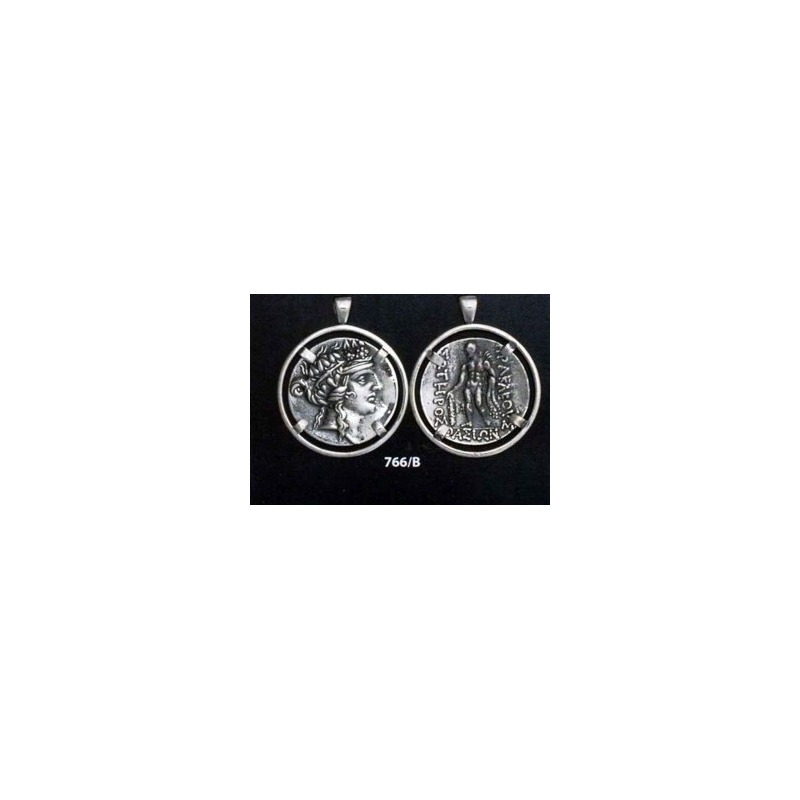
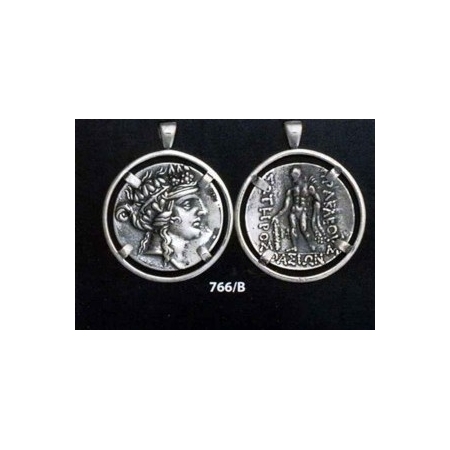
766/B Thassos tetradrachm Dionysus & Hercules
766/B
New product
AR tetradrachm - Thassos (Thrace)
Obverse: Head of young Dionysos right, wreathed with ivy and with band across forehead / Reverse: Naked Heracles with lion-skin over left arm and club Legend reads "ΗΡΑΚΛΕΟΥΣ ΣΩΤΗΡΟΣ ΘΑΣΙΩΝ)
Data sheet
| Article group | Pendants |
| Gender | For Him or Her |
| Material | Solid Sterling Silver |
| Outer diameter | 33 mm (1 and 19⁄64in) |
| Inner (coin) diameter | 27 mm (1 and 1⁄16in) |
More info
The Phoenicians settled on Thassos as early as 1500 BC although historians dispute the date of their arrival. There more opinions regarding the first settlers on the island. In any event, they were driven off by the Thracians and then the Pariahs and by 400 BC Thassos was a wealthy and important island dubbed by historians 'the Athens of the north' and the most densely populated island in the Aegean. They achieved a high degree of civilization in the Archaic period.
In the Persian wars, Thassos submitted tamely to invasion despite some impressive walled defenses. Following defeat against Athens, the Persians left and the island became a member of the Delis League. But heavy taxes by League leader Athens and a dispute over mainland mines led to the eventual reduction of the island. About 360 BC the island was seized by Philip II and it remained Macedonian until the Romans arrived in 196 BC. During this period it developed a flourishing export of wine, and Thasians merchants carried on the trade between Thrace and Southern Greece. Under the Empire Thasian marble and oil enjoyed an international reputation.