


 View larger
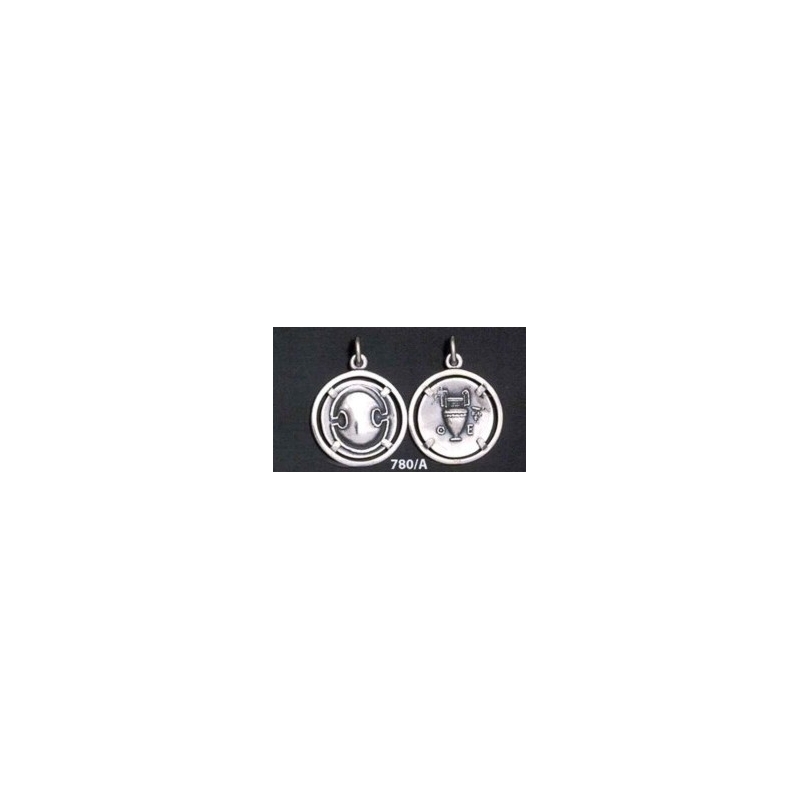
780/A Thebes shield / amphora pendant
780/A
New product
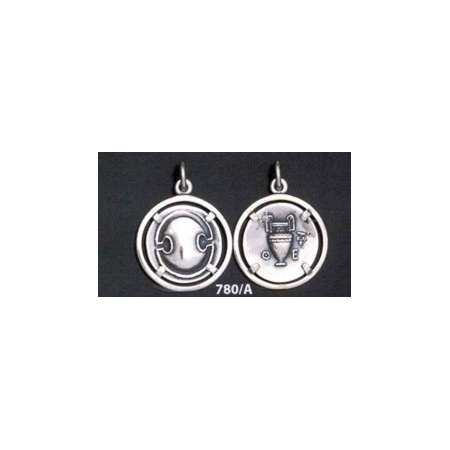
Boeotia, Thebes AR Stater. ca 425–400 BC. Boeotian shield / Q-E, amphora
Reverse: Definition of amphora
Data sheet
| Article group | Pendants |
| Gender | For Him or Her |
| Depiction | Vases & Sculptures |
| Historic Period | Era: Classical |
| Material | Solid Sterling Silver |
| Outer diameter | 24 mm (15⁄16in) |
| Inner (coin) diameter | 19 mm (3⁄4in) |
More info
An amphora is a type of ceramic vase with two handles and a long neck narrower than the body.
Amphorae first appeared on the Syrian coast around the 15th century BC and spread around the ancient world, being used by the ancient Greeks and Romans as the principal means for transporting and storing grapes, olive oil, wine, oil, olives, grain, fish, and other commodities. They were produced on an industrial scale from Greek times and used around the Mediterranean until about the 7th century.
High-quality painted amphorae were produced in significant numbers for a variety of social and ceremonial purposes. Their design differs significantly from the more functional versions; they are typified by wide mouth and a ring base, with a glazed surface and decorated with figures or geometric shapes. Such amphorae were often used as prizes.
Some examples, bearing the inscription "I am one of the prizes from Athens", have survived from the Panathenaic Festivals held between the 6th century BC to the 2nd century in Greece.